
Your homeowners policy doesn't cover flood damage — in South Florida, that's not a technicality, it's the single biggest gap in most people's coverage. We shop around to find you the best flood insurance rates and real protection at a fair price.
Standard homeowners, condo, and renters policies in Florida explicitly exclude flood damage. It doesn't matter whether the water came from a storm surge, a heavy summer downpour, or a canal overflow — if it entered from the ground up, your homeowners policy will not pay for it. Flood coverage has to be purchased as its own policy.
South Florida's flat terrain, high water table, and hurricane exposure make this more than a formality. FEMA data consistently shows that a large share of flood claims nationwide come from properties outside mapped high-risk zones — meaning "my house isn't in a flood zone" is not the same as "my house can't flood."
The mortgage angle: if your property carries a federally backed mortgage and sits in a FEMA-designated high-risk zone (Zone AE or VE), your lender is legally required to make you carry flood insurance for as long as the loan is active.
Most people default to the National Flood Insurance Program because it's the name they've heard of. It's a solid option, but it isn't automatically the best one for your property. We aren't tied to either — we compare the numbers for your specific address and let the coverage decide.
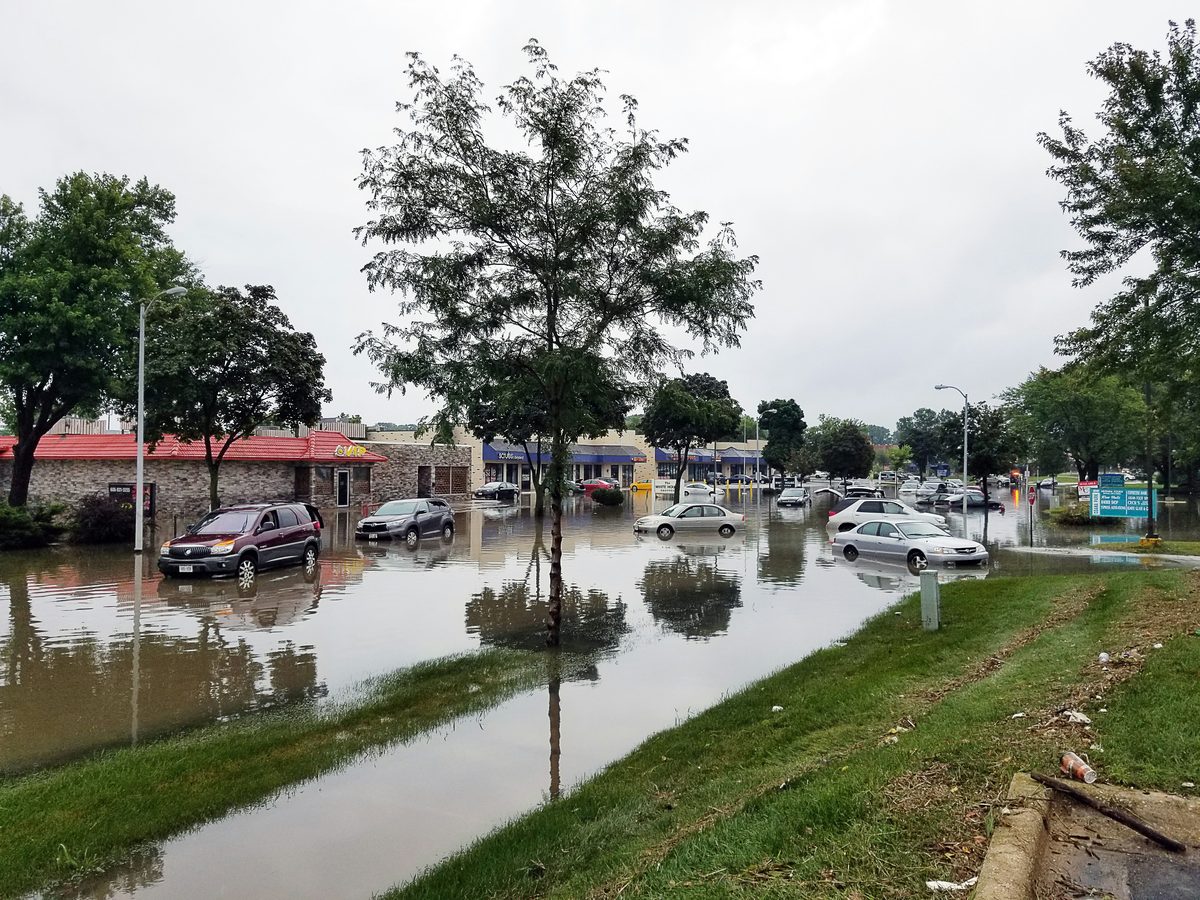
Flood damage isn't limited to hurricanes — it's the everyday risk flood insurance is built for. (Photo: Jim Gade / Unsplash)
We work across South Florida every day and know how flood risk differs block by block, not just county by county.
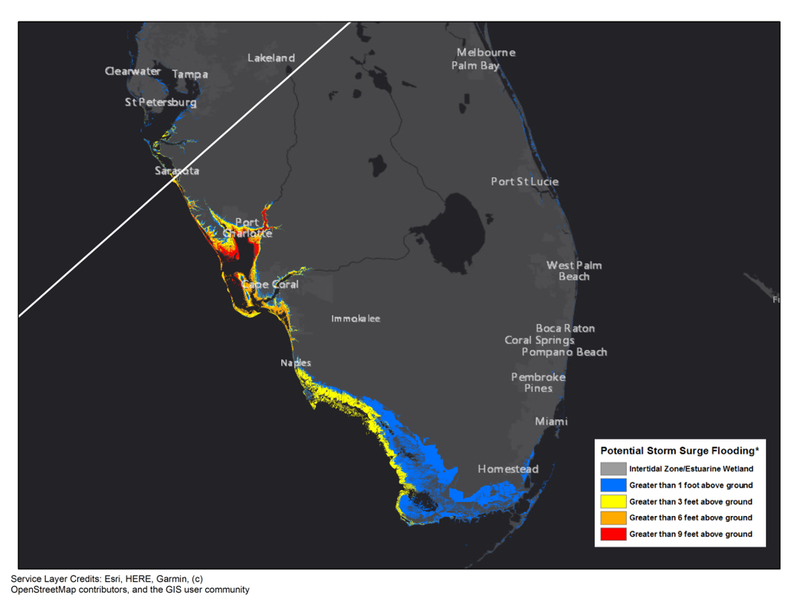
Potential storm surge flooding, South Florida. (Source: NOAA National Hurricane Center — service layer credits: Esri, HERE, Garmin, OpenStreetMap contributors)
Coastal and canal-adjacent neighborhoods face some of the highest flood premiums in the state, but also the most private-carrier competition — often the biggest savings opportunity.
Low elevation and an extensive canal system mean many inland neighborhoods carry real flood exposure even outside mapped high-risk zones.
A mix of coastal high-risk zones and inland communities where flood insurance is optional but, given regional rainfall patterns, worth pricing out.
No. Standard homeowners and condo policies in Florida exclude flood damage. Flood coverage has to be purchased separately, either through the NFIP or a private flood carrier.
If your home has a federally backed mortgage and sits in a FEMA high-risk flood zone (AE or VE), your lender requires it. Outside those zones it's optional — but a large share of Florida flood claims come from homes that weren't in a mapped high-risk zone.
NFIP is capped at $250,000 in building coverage and $100,000 in contents. Private carriers often offer higher limits and broader coverage, and pricing can be more or less favorable depending on your property's elevation and construction. We compare both for you.
It depends on your flood zone, elevation, year built, and foundation type. Since FEMA's Risk Rating 2.0 methodology took effect, pricing reflects your property's individual risk rather than just its zone — two homes on the same street can price very differently. A quote is the only way to know your real number.
Yes. Renters can buy contents-only coverage for belongings, and condo owners can cover their unit's interior and contents even when the association carries a master flood policy on the building.
Tell us your address and a bit about the property — we'll shop NFIP and private carriers and come back with real numbers, in English or Spanish.
☎ Call or Text Us Now